
Quenching is the final and critical step of the hardening process.
After heating above the AC3 critical temperature, parts are rapidly cooled below the martensitic finish temperature (Ms). This transformation of austenite into martensite leads to a significant increase in hardness and mechanical strength.
Quenching can be performed in various media—gas, salt, oil, water or air—each offering a specific cooling rate and operating window. Selecting the right quenching medium is essential to obtain a fully martensitic structure while avoiding undesirable mixed phases such as pearlite or bainite.
Cooling Media
Quenching media are classified from slowest to fastest cooling rate:
- Air cooling
- Gas cooling
- Salt cooling
- Oil cooling
- Water cooling

Technical principles of martensitic hardening
Quenching aims to achieve a fully martensitic microstructure without forming intermediate phases that degrade mechanical performance.
- The chosen cooling medium affects hardness, distortion and microstructure
- Distortion tendency is inversely related to quenching severity
- Water quenching generates the highest distortion; air quenching the lowest
- Salt and oil offer a balance between performance and dimensional stability
During transfer from furnace to quench tank, protective gases are used to minimize decarburization, IGO/IGA and surface discoloration.

Air
- Slowest medium
- Risk of oxidation
- Used when minimal quench severity is required

Gas
- Clean process with limited oxidation
- Moderate exchange rate
- Nitrogen commonly used as protective gas

Salt
- Operating range: 180 °C to 400 °C
- Suitable for martensitic and bainitic hardening
- Excellent heat transfer, easily washable

Oil
- Most common medium
- Operating typically between 50 °C and 100 °C
- High cooling rate

Water
- Fastest and harshest cooling medium
- Vapor blanket formation may reduce uniformity
- Highest distortion risk

Codere expertise in quenching
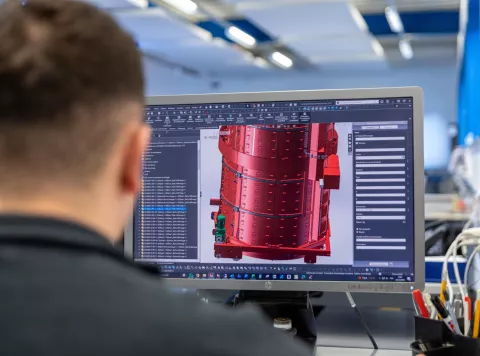
Codere develops high-performance quenching systems designed to limit deformation, protect surfaces and ensure reliable and repeatable metallurgical results.
- Quench tanks engineered for uniform cooling
- Optimized agitation for consistent heat extraction
- Integration with C10/C11 heating modules (System 250)
- HTView supervision for full traceability
- Protective gas injection for surface quality preservation
- Swiss engineering ensuring robustness and safety
Typical applications:
- Tools and dies
- Shafts and gears
- Bearings
- Watch parts
- Structural and mechanical components
- Etc.

Key advantages / Why Choose Codere
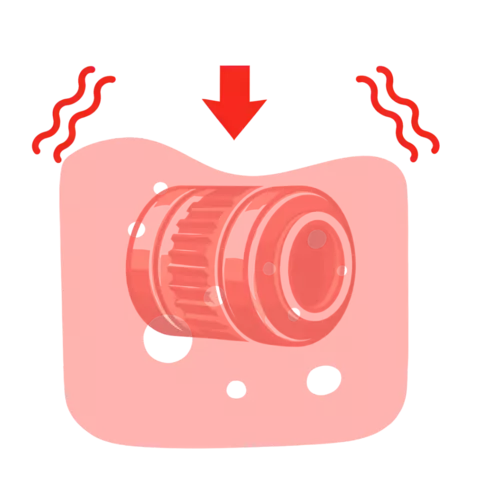
Quenching uniformity

Repeatability

Protective atmosphere during transfer
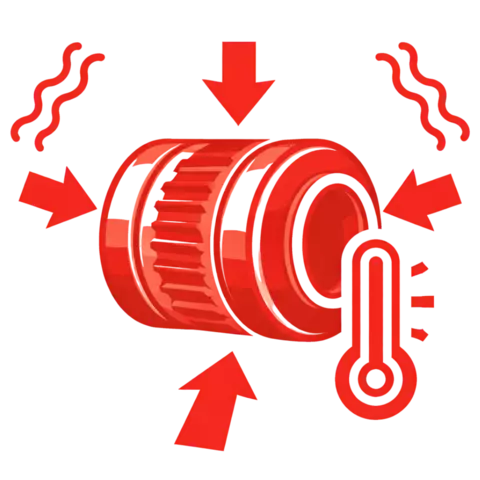
Reduced distorsion

Multi-fluid tank configurations

Reliable and traceability with HTView
Available furnace configurations for various quenching
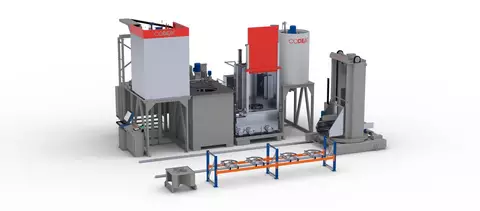
System 250
Modular multi-treatment lines, quenching in water, polymer, oil, salt or gas
On request
Custom manufacturing
System 230
Pit furnaces for deep hardening
Interested?
Contact us today. Our experts will give you all the information you need.