

Hardening is a heat treatment process that consists of heating steel components to the appropriate temperature to form austenite, followed by rapid cooling in a quenching medium.
During quenching (gas, salt, oil or water), the austenitic structure transforms into martensite or bainitic, significantly increasing hardness and mechanical strength.
Hardness after quenching depends primarily on the carbon content of the steel, as well as the quenching speed and atmosphere conditions. Neutral hardening is typically performed under precisely controlled protective atmospheres to ensure clean component surfaces and consistent metallurgical properties.
Temperature profile for hardening process
Hardening process requires strict control of heating and cooling phases to achieve the desired martensitic transformation.
- Temperature range: 750 °C to 1050 °C
- Atmosphere for neutral hardening: Nitrogen with cracked methanol enrichment, propane for carbon potential adjustment.
- Quenching media: Gas, oil, salt or water depending on steel grade
Correct tuning of these parameters is essential to minimize distortions while achieving full hardness.

Technical principles of hardening
The hardening process is essential for parts that must withstand high mechanical loading, wear and fatigue.
- Significant increase in hardness
- Improved mechanical resistance
- Optimizable parameters to limit deformation
With precise thermal management and optimized quenching, stable results and low distortions can be achieved.

Codere expertise in hardening process
Codere designs and manufactures robust hardening solutions ensuring repeatability, stability and full process control.
Codere systems guarantee highly controlled martensitic hardening with predictable results.
We offer :
- Precise temperature uniformity in C10 / C11 modules
- Controlled neutral atmospheres (N₂ / methanol)
- Optimized quenching with multiple tank configurations
- HTView supervision for cycle traceability
- Swiss-quality engineering ensuring reliability and durability
- Process tuning to reduce distortions and ensure metallurgical consistency
Applications for hardening
Hardening is used wherever parts must resist high loads, wear or repeated mechanical stresses.
- Tools and dies
- Punches
- Watchmaking components
- Landing gear parts
- Bearings
- Shafts and precision mechanical components
To achieve the required hardness, the quenching medium must always be adapted to the steel grade.

Applications and industries
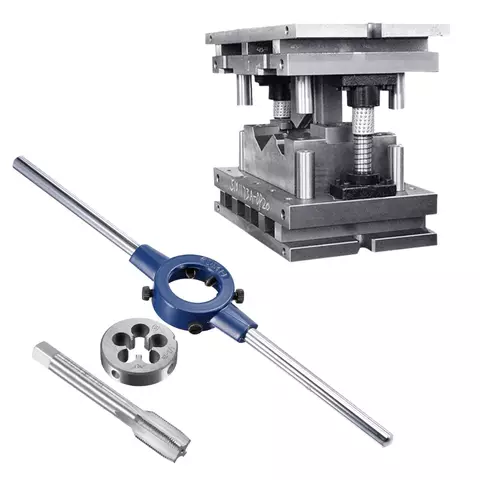
Tools die
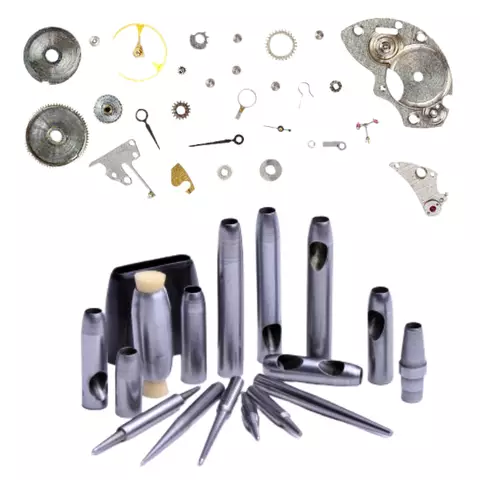
Punches, watch parts
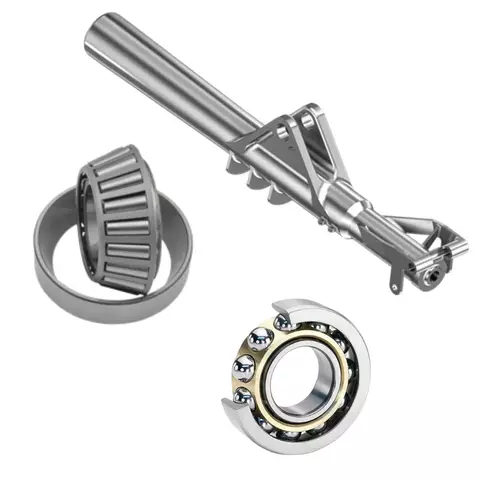
Landing gears, bearings
Key advantages / Why Choose Codere

T° precision

Repeatability

Flexibility

Reliability

Low maintenance

Traceability with HTView
Available furnace configurations for hardening
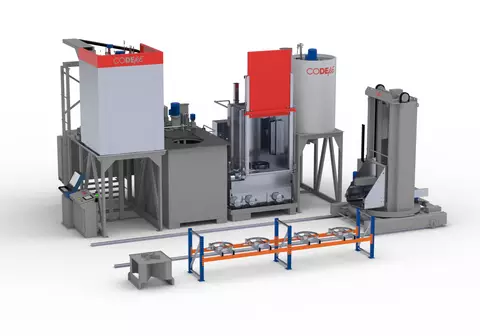
System 250
Modular multi-treatment lines, quenching in water, polymer, oil, salt or gas
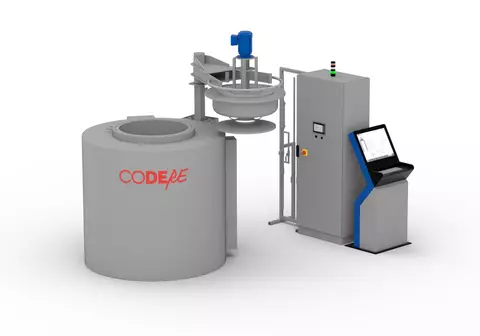
System 230
Pit furnaces for deep hardening
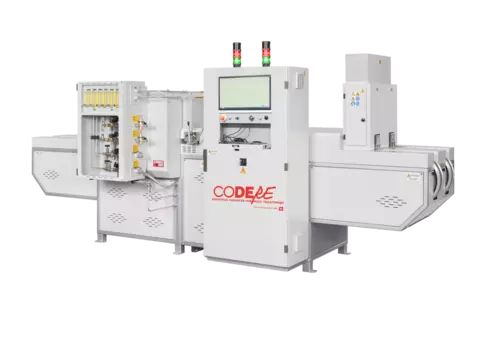
System 300
Continuous lines for high-volume production
Interested?
Contact us today. Our experts will give you all the information you need.