
Brazing is a metal-joining process in which components are assembled using a filler metal whose melting point is lower than that of the base materials.
Unlike welding, the base metal does not melt: only the filler alloy liquefies and flows by capillarity into the joint, creating a strong, sealed and durable bond. Brazing is ideal for precision assemblies requiring mechanical strength and minimal distortion.
Brazing temperatures typically range from 180 °C to 1200 °C, with the most common industrial applications between 450 °C and 1100 °C. Depending on the filler metal and material requirements, the process can be carried out under:
- Neutral atmospheres (N₂, Ar)
- Reducing atmospheres (H₂)
- Controlled multi-gas protective atmospheres
These controlled conditions prevent oxidation and ensure clean, high-quality joints.
Temperature profile for brazing process
Precise thermal control is essential to guarantee proper filler flow and joint integrity.
Key parameters include:
- Heating to filler liquidus temperature
- Controlled soaking to ensure uniform heating
- Capillary wetting of the joint under protective atmosphere
- Regulated cooling to avoid deformation or oxidation
A stable thermal cycle ensures reproducibility and consistent metallurgical results.

Technical principles of brazing
The objective of brazing is to bond different metals without melting the parts themselves. The process relies on:
- Melting and flowing of a filler alloy into the joint
- Capillary action ensuring full penetration
- Oxide-free surfaces maintained by a neutral or reducing atmosphere
- Stable temperature conditions ensuring repeatability
- Controlled furnace environment for perfect joint cleanliness
Codere furnaces are engineered to deliver this precision for both simple and highly demanding applications.

Codere expertise in metal brazing furnace
Codere designs and manufactures high-performance brazing furnaces guaranteeing uniformity, precision, safety and long-term reliability.
Whether for industrial parts or high-value small components, Codere ensures perfect brazing conditions.
- Excellent temperature uniformity
- Optimized gas flow and atmosphere stability
- Automatic cycle control (temperature, atmosphere, soaking time)
- HTView supervision software for full traceability
- Compliance with aerospace and high-precision requirements
- Swiss engineering ensuring long-lasting performance
Applications
Brazing is used across many industries where strong, clean, and precise joints are required.
Main applications
- Automotive components
- Aerospace and defense parts
- High-vacuum and technical assemblies
- Jewelry and watchmaking
- Medical and tooling industries
- Machinery and energy sectors
Example: Brazing of watch casings, ensuring airtight sealing and perfect surface quality.

Key advantages / Why Choose Codere

T° precision

Repeatability

Flexibility

Reliability

Low maintenance

Traceability with HTView
Available furnace configurations for brazing
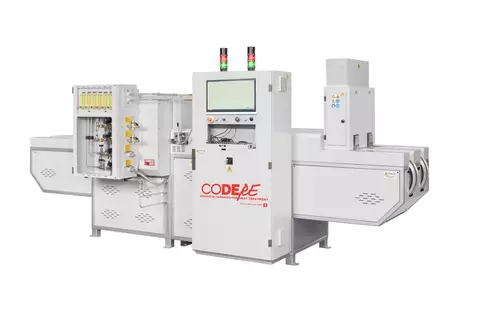
System 300
Continuous furnaces
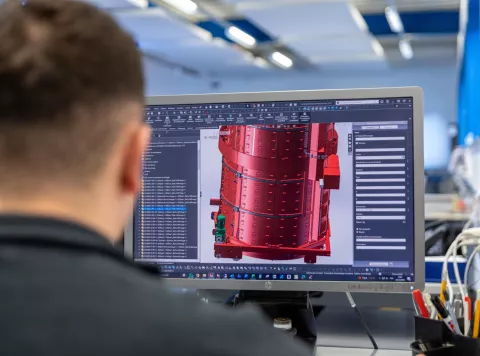
On request
Custom development
Interested?
Contact us today. Our experts will give you all the information you need.