
page
Industrie de l'outillage: solutions de traitement thermique haute performance pour outillage à main, matrices et moules
L'industrie de l'outillage est le pilier de la fabrication moderne.
Elle fournit des outils de précision tels que des instruments de coupe, des matrices, des moules, des poinçons et des outils de formage à des secteurs tels que l'automobile, l'aérospatiale, les dispositifs médicaux et l'énergie.
Ces outils fonctionnent sous des charges mécaniques, des frottements et des cycles thermiques extrêmes, ce qui exige une dureté, une résistance à l'usure et une stabilité dimensionnelle exceptionnelles.
Pour les fabricants d'outils, le succès de chaque outil — et la qualité des pièces qu'il produit — dépend directement de la précision et de la fiabilité de son traitement thermique. Codere SA fournit des systèmes qui garantissent des résultats reproductibles, contrôlés et sans distorsion pour les aciers à outils haute performance.
page
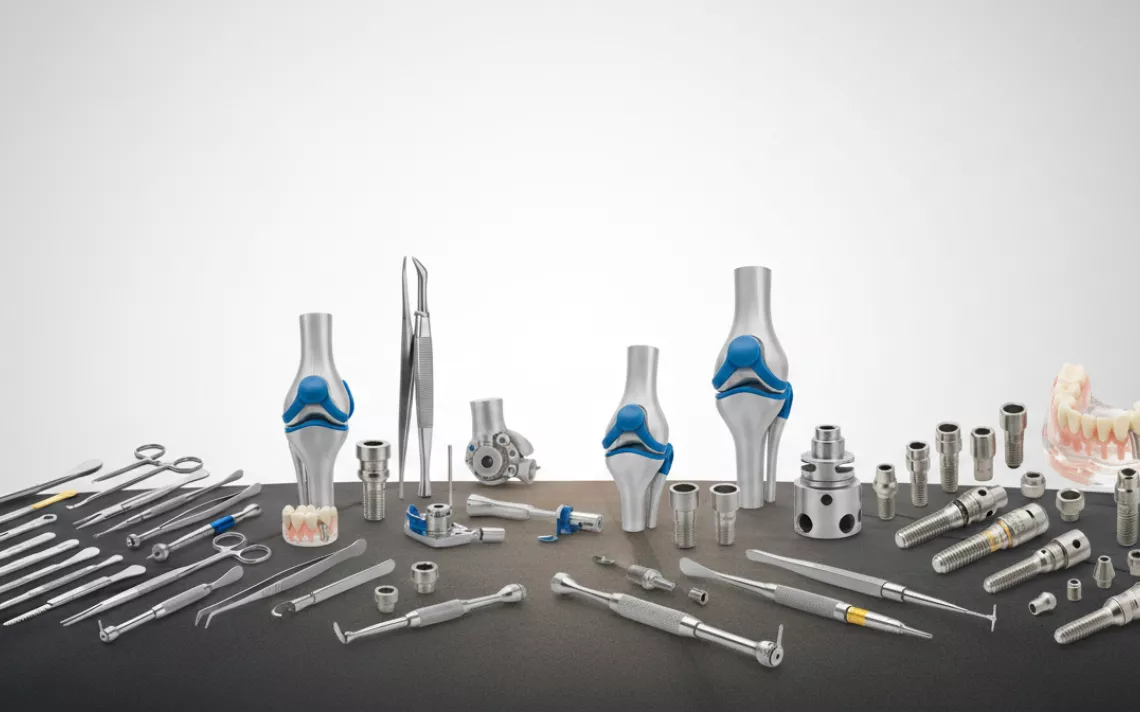
Medizinindustrie : Präzision, Wiederholbarkeit und Konformität für die anspruchsvollsten Anwendungen
Der medizinische Sektor erfordert außergewöhnlich hohe Präzision, Wiederholgenauigkeit und Sauberkeit.
Medizinische Instrumente und Implantate müssen strenge Anforderungen erfüllen, einschließlich des Qualitätsmanagementsystems ISO 13485 und darüber hinaus absolute Zuverlässigkeit während ihres gesamten Lebenszyklus garantieren.
Codere SA bietet Wärmebehandlungsanlagen, die speziell auf diese Anforderungen ausgelegt sind. Mit unserer HTView-Überwachungssoftware werden vollständige Rückverfolgbarkeit, erweiterte Datenaufzeichnung und Fernsteuerungsfunktionen sichergestellt – exakt abgestimmt auf die hohen Erwartungen von Herstellern medizinischer Geräte.
page
Medical industries: precision, repeatability, and compliance for the most demanding applications
The medical sector requires exceptionally high precision, repeatability, and cleanliness.
Medical instruments and implants must meet strict regulatory requirements, including the ISO 13485 quality management system, and guarantee absolute reliability throughout their lifecycle.
Codere SA offers heat treatment equipment specifically designed to support these requirements. With our HTView supervision software, full traceability, advanced data recording, and remote-control functionalities are ensured—matching the stringent expectations of medical device manufacturers.
page
Secteur médical: précision, répétabilité et conformité pour les applications les plus exigeantes
Le secteur médical exige une précision, une répétabilité et une propreté exceptionnelles.
Les instruments et implants médicaux doivent répondre à des exigences réglementaires strictes, notamment au système de gestion de la qualité ISO 13485, et garantir une fiabilité absolue tout au long de leur cycle de vie.
Codere SA propose des équipements de traitement thermique spécialement conçus pour répondre à ces exigences. Grâce à notre logiciel de supervision HTView, la traçabilité complète des procédés, l'enregistrement des données performant et les fonctionnalités de contrôle à distance sont assurés, répondant ainsi aux attentes strictes des fabricants d'équipements médicaux.
page
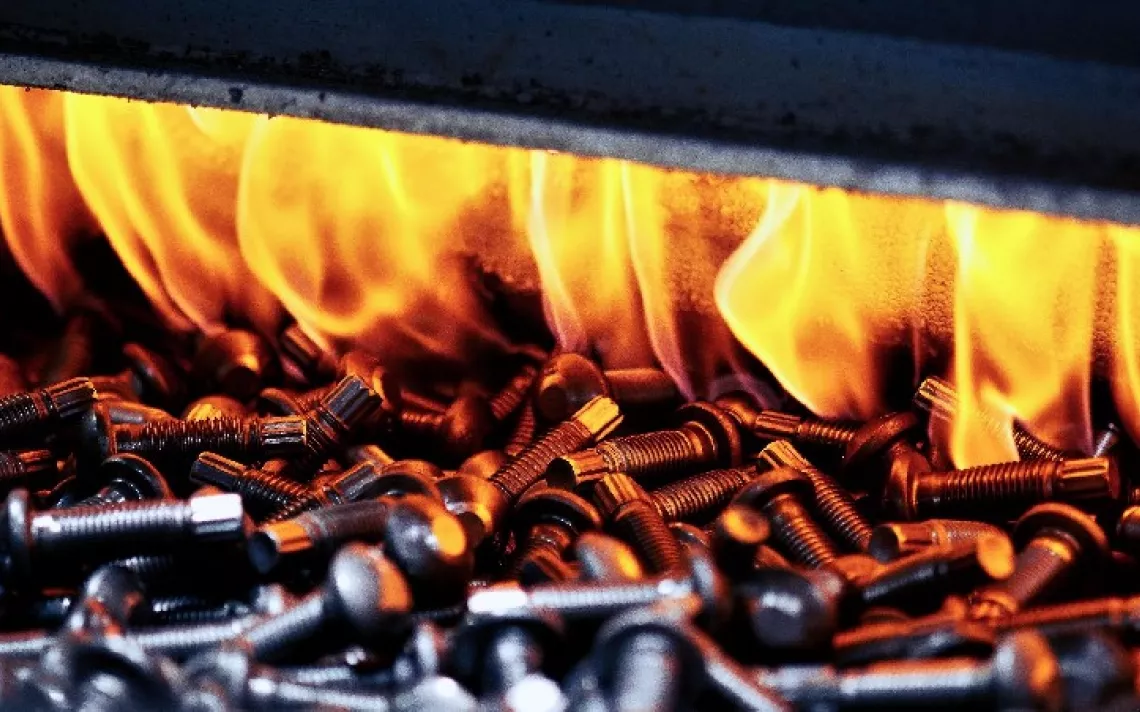
Härtebehandlung
Härten ist ein Wärmebehandlungsverfahren, bei dem Stahlbauteile auf die geeignete Temperatur erhitzt werden, um Austenit zu bilden, und anschließend in einem Abschreckmedium schnell abgekühlt werden.
Während des Abschreckens (Gase, Salze, Öle oder Wasser) wandelt sich die austenitische Struktur in Martensit um, wodurch die Härte und die mechanische Festigkeit deutlich erhöht werden.
Die Härte nach dem Abschrecken hängt in erster Linie vom Kohlenstoffgehalt des Stahls sowie von der Abschreckgeschwindigkeit und den atmosphärischen Bedingungen ab. Das neutrale Härten wird üblicherweise unter präzise geregelter Schutzatmosphäre durchgeführt, um saubere Bauteiloberflächen und gleichmäßige metallurgische Eigenschaften sicherzustellen.
page
Hardening heat treatment process
Hardening is a heat treatment process that consists of heating steel components to the appropriate temperature to form austenite, followed by rapid cooling in a quenching medium.
During quenching (gas, salt, oil or water), the austenitic structure transforms into martensite or bainitic, significantly increasing hardness and mechanical strength.
Hardness after quenching depends primarily on the carbon content of the steel, as well as the quenching speed and atmosphere conditions. Neutral hardening is typically performed under precisely controlled protective atmospheres to ensure clean component surfaces and consistent metallurgical properties.
page
Procédé de traitement thermique de durcissement
Le durcissement est un procédé de traitement thermique qui consiste à chauffer des composants en acier à la température appropriée pour former de l'austénite, suivi d'un refroidissement rapide dans un milieu de trempe.
Lors de la trempe (gaz, sel, huile ou eau), la structure austénitique se transforme en martensite, augmentant considérablement la dureté et la résistance mécanique.
La dureté après trempe dépend principalement de la teneur en carbone de l'acier, ainsi que de la vitesse de refroidissement et des conditions atmosphériques. Le durcissement neutre est généralement réalisé sous atmosphère protectrice rigoureusement contrôlée afin de garantir des surfaces propres et des caractéristiques métallurgiques homogènes.
page
Aufkohlen
Aufkohlen ist ein thermochemischer Prozess, bei dem die Stahloberfläche mit Kohlenstoff angereichert wird, um Härte, Festigkeit und Verschleißfestigkeit zu verbessern.
Die Teile werden in einer kontrollierten Aufkohlungsatmosphäre über die AC3-Temperatur erhitzt und für eine bestimmte Zeit auf dieser Temperatur gehalten, um die gewünschte Einhärtungstiefe zu erreichen.
Das Carbonitrieren ist ein verwandtes Verfahren, bei dem sowohl Kohlenstoff als auch Stickstoff in die Oberfläche diffundieren. Stickstoff wird in der Regel durch Ammoniak zugeführt, wodurch die Härtbarkeit, die Wärmebeständigkeit und die Verschleißfestigkeit erhöht werden.
Nach dem Aufkohlen oder Carbonitrieren werden die Teile abgeschreckt (in Gasen, Salzen, Ölen oder Wasser), um sowohl die Oberfläche als auch den Kern zu härten. Der höhere Kohlenstoffgehalt an der Oberfläche verbessert die erreichbare Härte und erhöht die mechanische Festigkeit.
page
Carburizing heat treatment process
Carburizing is a thermochemical process that enriches the steel surface with carbon to improve hardness, strength and wear resistance.
Parts are heated above the AC3 temperature in a controlled carburizing atmosphere and maintained for a defined time to achieve the desired case depth.
Carbonitriding is a related process in which both carbon and nitrogen diffuse into the surface. Nitrogen is typically supplied by ammonia, increasing hardenability, heat resistance and wear performance.
After carburizing or carbonitriding, parts are quenched (gas, salt, oil or water) to harden both surface and core. The higher carbon content at the surface improves achievable hardness and increases mechanical resistance.
page
Procédé de cémentation et de carbonitruration
La cémentation est un procédé thermochimique qui enrichit la surface de l'acier en carbone afin d'améliorer sa dureté, sa résistance et sa résistance à l'usure.
Les pièces sont chauffées au-dessus de la température critique dans une atmosphère de cémentation contrôlée et maintenues pendant un temps défini pour atteindre la profondeur de cémentation souhaitée.
La carbonitruration est un procédé apparenté au cours duquel le carbone et l'azote diffusent dans la surface. L'azote est généralement apporté par l'ammoniac, ce qui améliore la trempabilité, la résistance à la chaleur et la résistance à l'usure.
Après cémentation ou carbonitruration, les pièces sont trempées (gaz, sel, huile ou eau) afin de durcir la surface tout en conservant un cœur tenace. La teneur plus élevée en carbone en surface améliore la dureté et la résistance mécanique.
page
Nitrier- und Nitrocarburierungsverfahren
Das Nitrieren ist eine thermochemische Behandlung, bei der Stickstoff in die Oberfläche von Stahl diffundiert, um dessen Härte, Verschleißfestigkeit und Dauerfestigkeit zu erhöhen.
Das Nitrocarburieren ist ein verwandtes Verfahren, bei dem durch Zugabe von Propan oder Methan sowohl Stickstoff als auch Kohlenstoff in die Oberfläche eingebracht werden.
Die Nitrierbehandlungstiefe ist zeit- und temperaturabhängig, und der Prozess wird unter kontrollierter Atmosphäre durchgeführt. Spezielle Nitrierstähle ermöglichen die Bildung harter Nitride (ε, γ’).
Der Nitrierprozess erzeugt typischerweise eine zweischichtige Struktur: eine Verbindungsschicht und eine Diffusionsschicht, deren Bildung vom Nitrierpotenzial abhängt.
Das Nitrocarburieren ermöglicht kürzere Zykluszeiten und eine präzisere Kontrolle der Schichtzusammensetzung.
Die Temperatur für Nitrierprozesse liegt in der Regel zwischen 490 °C und 560 °C, je nach Material und gewünschten Schichteigenschaften.
page
Nitriding and nitrocarburizing heat treatment process
Nitriding is a thermochemical treatment in which nitrogen diffuses into the surface of steel to increase hardness, wear resistance and fatigue strength.
Nitrocarburizing is a related process that introduces both nitrogen and carbon into the surface by adding propane or methane.
The Nitrding treatment depth is time- and temperature-dependent, and the process is carried out under a controlled atmosphere. Specific nitriding steels allow the formation of hard nitrides (ε, γ’).
The nitriding process typically produces a two-layer structure: a compound layer and a diffusion layer, whose formation depends on the nitriding potential.
Nitrocarburizing reduces cycle time and allows greater control of layer composition.
Temperature for nitriding processes generally ranges from 490 °C to 560 °C, depending on material and desired layer characteristics.